The short summary here is somewhat reassuring. For instance, if I can use one of the USB-C ports to host other devices, it’d mean that I could plug a Zefiro breath controller directly in this MPE controller, to create something close to my ideal setup. Similar idea for the FCB-01 (though I can use a Bluetooth adapter for that one).
Among the questions I have are some things about power and USB requirements. On my M1 MacBook Air (only two ports, one for power), I’ve noticed that I can’t use the Exquis on the same Thunderbolt port as just about anything else. Although, it does work from my audio interface’s USB-A host, strangely enough.
I’m interested in the device for a variety of reasons. Not least of which: support for custom code.
Thing is, been vibecoding a number of things, several of which I’ve been integrating as a suite. Standalone apps, webapps, plugins (VST3, AUv3, CLAP, AU, and LV2 for macOS, iPadOS, and Linux (including PatchboxOS in some cases)).
It includes a simple wavetable synth designed from the start to work well with MPE (and breath) controllers. Most of them are about MIDI, though. (One of my original concepts is “MIDIsplainer”, using MIDI tools to 'splain some interesting things.)
There’s quite a bit that I want to do with these which could run on a controller. Even without a display.
For instance, I can generate chord progressions (with voiceleading, associated scales, etc.). While it’s currently based on GUI, I’ll be adapting it to headless mode.
What I’d like to do is display the current chord and scale, probably with colour coding (for chord degrees and Non-Chord Tones within the scale; maybe another colour for “avoid notes”).
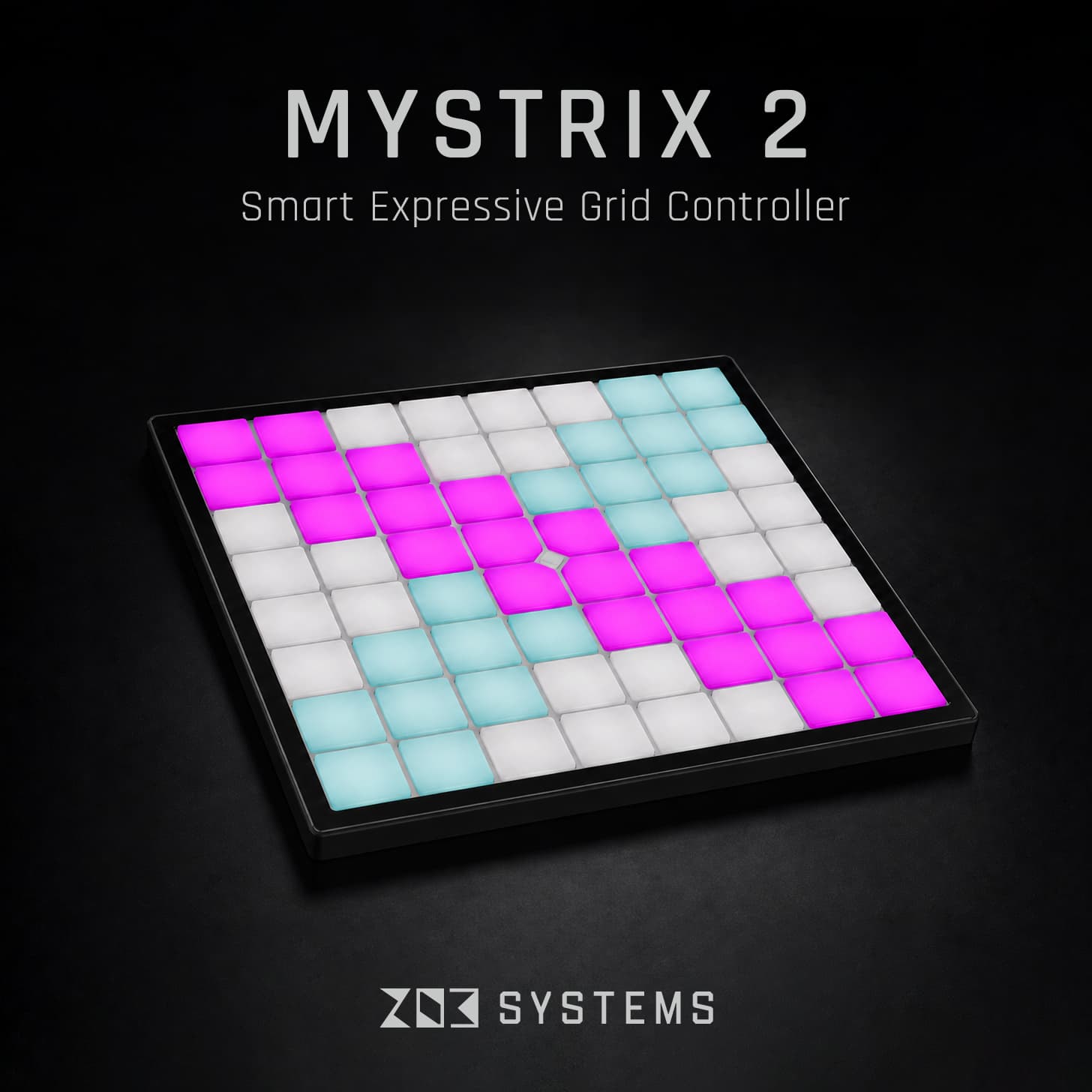
Currently, it displays grids on screen. Either square (Launchpad, Push, Mystrix…) or hex (Exquis). Because Exquis displays incoming MIDI notes (albeit in a single colour), I can already do something which highlights the notes I can play alongside the current chord. Tested it in other situations and that’s quite instructive.
It’d be nice to have the same on a square grid with full MPE support.
And there’s the whole notion of using the controller as a… control surface. One of the tools allows one to draw and play “qurves” (quantizable curves). Could be fun to trigger them directly from a controller.
So… Anything I can learn about what I’ll be able to script and what I’ll need to set up on my MacBook Air would be really useful.
yeah, I was going to comment - that I’ve no idea what “MPE support” means…
does it mean each pad has x/y/z , like say the linnstrument?
this would be cool, esp at this price point…
however, theres zero chance Id assume that (and therefore back) without confirmation, and frankly details, and videos showing it off.
also, we have seen from other controllers, its one thing for it to support MPE, and even have per finger/pad expression, its another thing for it to feel good!
e.g. pads that require too much pressure to register, dont feel great to play MPE on
what you ideally need is (I believe)
consistent and progressive pressure (per pad/finger)
consistent velocity (unfortunately, even MPE synth often rely far too much on it!)
low (ish) and consistent initial onset pressure.
fast (ish) refresh/ update rates
ofc, there is the price point, you cannot expect a $500 controllers to be as sensitive as a $4000 continuum
however, past experience, for me, has been there is a certain minimum required, if you plan to play expressively that is ‘enjoyable’.
below that its a false economy, its just not enjoyable to play, feels too inconsistent, or ‘dull’ - so I dont use… so is worth $0
I respect we all have different needs and budgets, and also this is hard to demonstrate even in videos… but buyer beware, for new products that you cannot try first (or return)
otherwise go or something others have and like e.g. linnstrument or striso etc, which have good reputations.
again I repeat - I wish the Mystrix 2 well !
we could certainly do with some more budget expressive controllers.
just we need more details…
we have, unfortunately, seen a few budget expressive controllers come n’ go, or not live up to expectations so ‘healthy’ scepticism is I believe warranted.
But I hope it ‘passes the test’, looks great, make it good and Im sure lots will be interested … perhaps also in a larger model, I think 16x8 could hit a nice sweet spot - hint
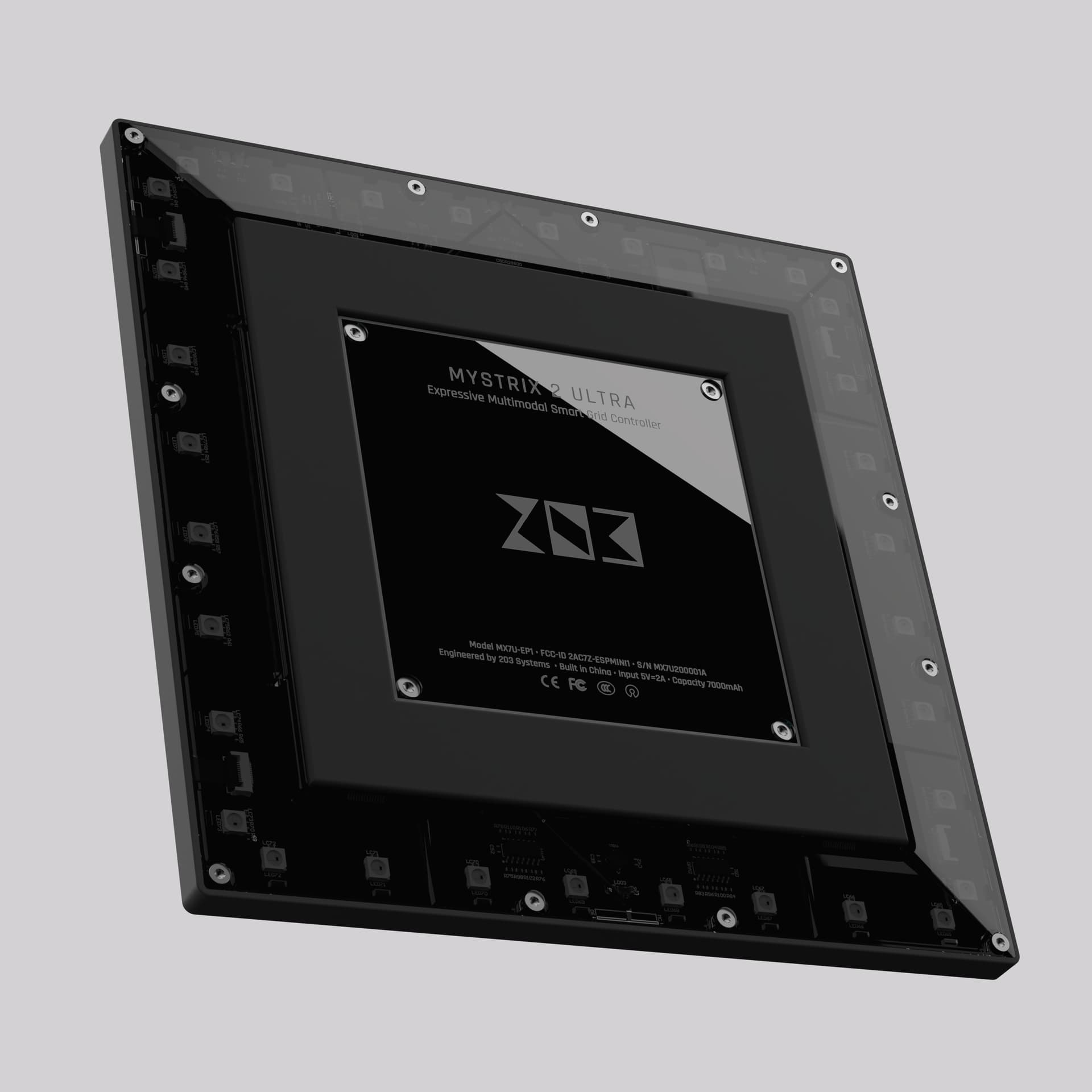
For difference is that there are no longer gonna be Mystrix 2 Pro / Mystrix 2 Ultra. Just a single Mystrix 2 with an aluminum chassis and more features. Design is a bit different and more premium as well. Still working on the content toward the launch.
Powering issue
I think it should work just fine, and I had good luck running existing Mystrix 1 on my MacBook Air, but I haven’t tested the latest Mystrix 2 Prototype yet. Also, all 3 USB-C ports on Mystrix 2 can be used as power input, so it’s less required on the host device.
Scripting
You can find all the docs on matrix.203.io and the developer toolkit (simulator) at dev.203.io. I should be able to release some vibecoding skills once the work on OS 4.0 is finalized.
Hi, it supports XYZ MPE like Linnstrument but without the multitouch limitations.
I have a prototype that works, but it’s not perfect yet, and a new prototype with better hardware and production intent look is gonna be ready in about 2 weeks. I want to do a proper showcase with someone who is actually talented in playing them once that’s done haha.
To be honest, the existing prototype that I have is not as good as LinnStrument, but I believe it can be as good as LinnStrument by the final release.
Thank you for your goodwill! It’s really hard building hardware, and honestly, Mystrix 1 was lacking a lot of stuff at launch, but it was a good platform to get me into maturing it with the help of the community. I think people will be surprised by how complete it is as a new product. Hopefully it’s good enough to stay. (And necessary since I really need more volume to make it go, especially at this price)
Also, please feel free to criticize anything. I really do want to make things as good as they can be. I kind sucks at marketing & writing, but at least I can try to make them better with your help.
If you see anything that’s weird not clear, please feel free to let me know!
I’m really impressed by the software freedom of the Mystrix mk1. I can modify its system to whatever I like.In many cases, just writing a python program and hot-loading it is enough to meet my needs, because both the lighting and sensor APIs are exposed. With how powerful AI coding has become these days, I believe this selling point can attract a lot of people right now.
The only remaining question (which I’d guess many people on this forum care about too) is the sensitivity and uniformity of the mk2. There are only two possible answers, “good to use” or “not good to use.” I hope some reference figures can be provided at launch, such as the trigger threshold, the z-axis consistency variance, the xy-axis movement detection distance, the minimum multi-touch detection distance, and the per-key sampling rate.
cool to hear your experience of the mk 1!
Im always interested in the custom/coding side of such devices
I’d caveat your ‘programming is easier/more accessible today’ (which is true), with most are not interested in the slightest, even if its possible- I feel we devs tend to overestimate the desire to do this (even if its possible)
yeah, Ive some sympathy with both sides of this…
I do think to some extent this is about setting expectations
honestly, tech specs can be a bit misleading on this, also there are different expectations.
on one hand we have dedicated controllers, like continuum, osmose, eigenharps they have to be 100% feel.
then we have the Madrona Labs Soundplane, this is something quite different, if you get technical, its really not great. however in practice, for some music styles it has a really special feel.
the above share one aspect they feel like instruments, and instruments can be different.
(actually another good example is the Striso, that feels so musical to touch)
in contrast, I love the Erae 2, and its makes a really good compromise between feel and flexibility.
but for me, personally it feels more like a (really useful) tool, than an instrument.
perhaps that just because its flexibility means it changes shapes, so its identity is not ‘fixed’, I don’t know…
ofc, different musicians will feel differently, its a form vs function argument.
But I always look back at my time with the (imperfect) Soundplane with fond memories, its quirks would frustrate the hell out of me at times, but at other times it felt like this was part of adapting to it, its character.
the wooden surface def played a big part of both is pros and cons!
(perhaps this is also why the continuum feels so great too?)
I guess, I feel for instruments, form is important, you want to feel a connection.
This can be hard for electronics devices, which can get really generic, and favour function/features. But I get it, they provide incredible value for money!
anyway great to hear @203Null has some experience with the linnstrument - this is a really great benchmark- and comparing against, will give a nice way to help set expectations.
one thing to consider, which I did mention already… 16x8 vs 8x8
when Ive tried 8x8 grids for playing, I personally found them a bit to ‘cramped’ esp. on smaller devices (e.g the Push is huge, so not so problematic) - its not so natural (for me) to play one hand above another, partly vision and ergonomics.
that said, I can get the appeal of having something small that you can throw in backpack
and, Im sure price / form factor would mean 8x8 sells better.
I know 2 models (8x8 + 16x8) probably gets more complicated, costly , risky,
But an idea…
Roli Lumi (and Striso) have used, is to allow multiple to be connected together, perhaps with a frame (Dual Striso approach) - that way you sell multiple 8x8 models
the frame and software support would mean that this is a bit more than just buying 2 8x8 and putting them together, but a ‘proper’ supported offering.
anyway just an idea … not sure what others think about this, perhaps its getting too costly?!
Mostly agree, but wanted to add that there’s a class of users which, despite having no interest in coding, does have a voracious appetite for user scripts.
(this is certainly true in max for live, and the norns community. probably organelle. not sure about ORAC.)
I can pretend I have enough money for one 8x8 unit, split across several payments. And perhaps I can repeat that later, for a matching pair. If there’s an upgrade kit to merge those and replace the enclosure, that would be an easily justified third purchase.
…but I don’t think I could make a 16x8 version happen at launch. Not all at once, in this economy.
(That said, it really is just a matter of time before Novation announces their MPE Launchpad, and 16x8 is a great way to differentiate yourself when it inevitably happens.)
sure, user scripting is important for some, no doubt - automation is useful.
part of this marketing is
While most controllers rely on a computer to do just one thing, Mystrix is a smart controller that could work standalone and do multiple things, transforming instantly to match your workflow or setup. It’s the ultimate creative platform.
so of course, this does require much more customisation, than something aimed at being ‘just’ and expressive musical controller
I guess, the caution is, Ive seen musicians ‘put off’, because an over emphasis on coding makes them feel its not for them…
ofc, thats not to say, for every one of them, there are not three thats see it as a benefit - Ive no idea on the sales/marketing demographics
100% fair, I agree… $500 is one thing, $1000 is another!
also, the expectations on a $1000 is very different too.
also whilst a 16x8 is really useful for a musical surface, its not really required for a ‘custom controller’ (see above)
overall, i can see why 8x8 is a sweet spot in cost/size and how its become the ‘norm’
I just think its a shame there are so few alternatives.
(even monome stopped the 16x16)
Instead of 16x8 something like 24x5 would imho be musically even more interesting. Eigenharp style. Or 24x6, for the guitarists out there.
That would be more instrument than controller!
Most “musicians” are at least familiar with editing basic midiCC or other behaviors of their gear, Matrix OS takes this to a whole new level. Using the graphic based online editor expands the Mystrix well beyond any current controller out there. And if one wants to go deep into the weed on programming like on the Haken, well then simply write or vibe your python code to your hearts content.
All that said, MPE and expressive 2.0 midi is a wide open wild west of synthesis goodness.
Thank you to all the creators from one humble user…
After exploring many many awesome controllers over many many years. This particular dev, Matrix OS and Mystrix controller caught my eye for both current and future possibilities.
Creating some new GE’s, with a grid in mind… And lots of realtime midi.
Something like a very very very elastic midi clip launcher!
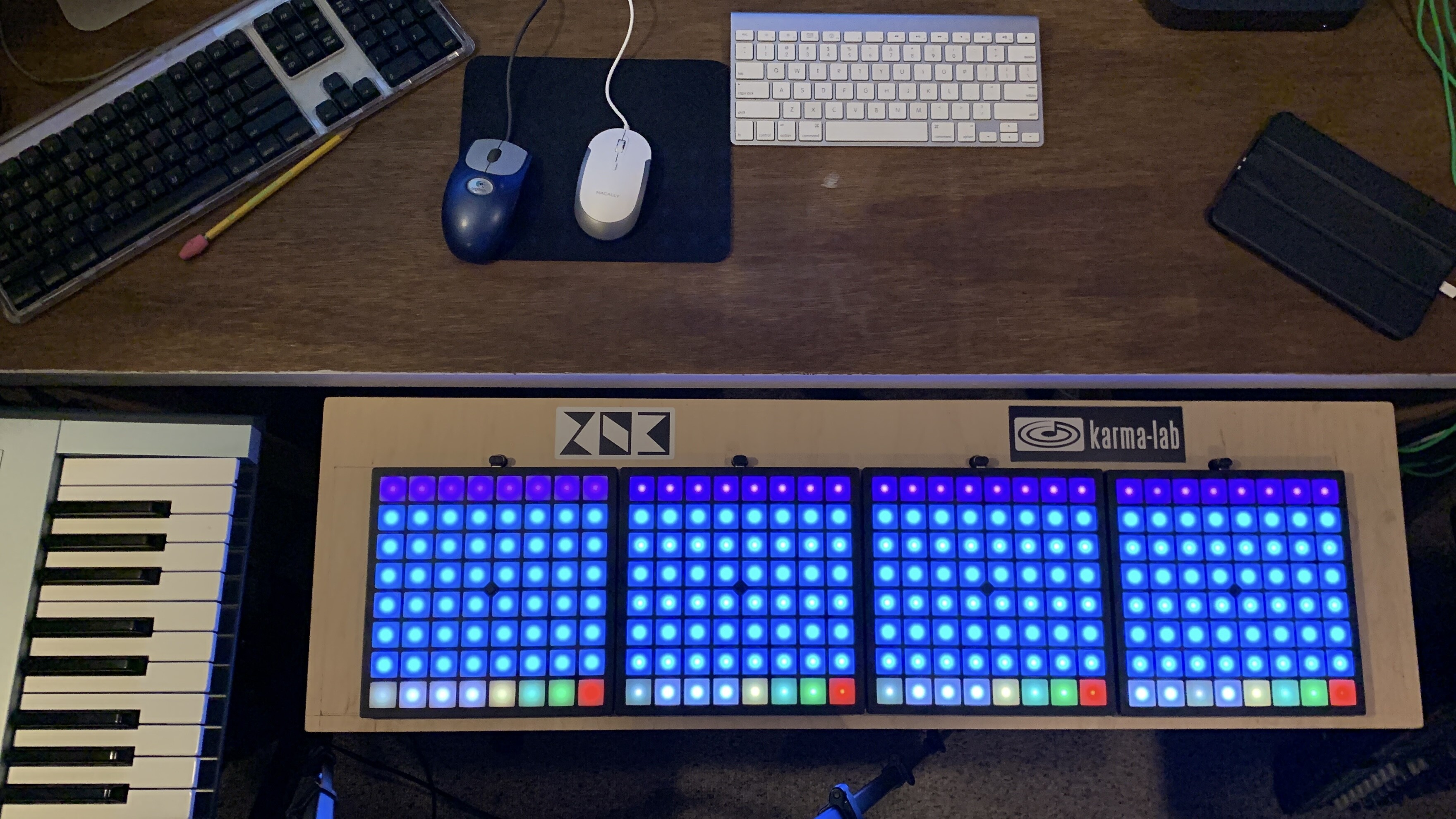
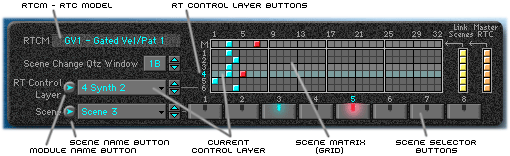
Primarily for direct cell based access to the KMo Scene Matrix. As well as all the RTC controls for editing and modulating live. Essentially, all 7 layers spread over 32 scenes, well thats 224 key combinations, not even a linnstrument does that! And all commercial pad controllers are super limited as well as “dongled” to subscribed software features for the most part. Which funny enough is the reverse of what Stephen did with KARMA
A fun aspect for me, is the ability to bridge “legacy” gear and software with mpe and midi 2.0. Doing something like Harmonic_mpe and attaching xyz movements to chord intervals as opposed to the round robin “hack”
I had to do some searching to work out what this meant
seems to be Karma Labs / KARMA for Korg Kronos, Im sure well known in these spheres (but I dont own a workstation, so never crossed my path)
that seems to make a lot of sense, adding a hardware interface to a powerful clip/midi sequencers ( oversimplification I know!).
seems like a really nice setup, Im all for extending UI into physical form, revolutionises some software solutions.
Id did suspect, based on your 32x8 layout and ‘colouring’ of leds,t was some kind of sequencing setup - makes a lot of sense.
many sequencers go beyond 8x8, usually to 16x8 e.g. Deluge/Hapax/Monome.
And all commercial pad controllers are super limited as well as “dongled” to subscribed software features for the most part.
no disrespect on matrixOS etc
but I don’t think that statement is 100% true…
Novation has had an api for launchpads for a while (main ‘competitor’ ?)
Embodme Erae (including mk1) has api on day 1
Monmome for decades, and there are open source hardware versions.
Linnstrument has options (including open source firmware)
etc etc.
many of these include high level apis e.g max, python etc, as well as sysex api etc.
but, for sure, many of these depend on running your app (to use api).
then again, in my experience, if you are running software (like Karma) on your machine already having another app running is a non-issue.
as for midi mapping,
yeah, features vary a lot , many have basic mapping (cc, notes etc), but few go as far as (e.g.) sysex.
so yeah, it depends on how deep you want to go, what experience you have etc.
at the end of the day, choice is good…
its cool you found a platform that worked for you, and created a really nice setup
What has stood out is the difference in open-source vs. proprietary frameworks. This project feels like a bold move to me, and I first looked to this 8x8 grid as a simple 1:1 controller for a near legacy piece of very proprietary software such as KARMA.
The underlying open-source Matrix OS is really the exciting aspect, and this is nearly impossible to find especially in commercial products such as those you mention. Which are ALL great for what they do. At the price points they offer them to us at…
Its an exciting time to be involved in creating more expressiveness of all kinds.
one thing to consider, which I did mention already… 16x8 vs 8x8
when Ive tried 8x8 grids for playing, I personally found them a bit to ‘cramped’ esp. on smaller devices (e.g the Push is huge, so not so problematic) - its not so natural (for me) to play one hand above another, partly vision and ergonomics.
I do intend to make them in more sizes in the future. To be completely real, the reason 8x8 is chosen is that it’s a faster path toward production. As a very, very small team, it’s hard to start from the ground up and deliver something polished within a reasonable time.
I do intend to make a more affordable version of them down the road. I hate not being able to deliver them to more people, but the sad reality is that the market is too small, and those high-quality and polished developments really took a lot of time and resources.
Mystrix 1 was priced equivalent to something like Launchpad X, but with much, much less margin to stay competitive. Even with that, I barely sold any of them, which caused a lack of funding for marketing, development, and scale-up. To keep the project alive, it went back to become a side project of mine and I have been working on it for the past 3 years for basically free in the hope of making something more complete and competitive in the future. I can’t risk again for selling Mystrix 2 at a low price again and hope for a volume seller.
However, realistically speaking, I think the Mystrix 2 hardware is very well built and very competittve pricing at this price range. There isn’t really anything like it on the market. And if that sold well and gained more interest, I could start working on maybe a plastic version, etc to try to lower the price.
I know it’s a hard pill to swallow, but I hope it’s understandable.
I think the real uniqueness of Matrix OS is that more things are standalone, like Monome Grid + Norms in one. Realistically speaking, probably DAWless/Full standalone isn’t something that a lot of people are into or have experience with, but I do it mostly because it’s pretty cool and very nice to use.
For Mystrix 2 I’m mostly pitching it as
A good musical keyboard (MPE capable with customizable layouts, effects),
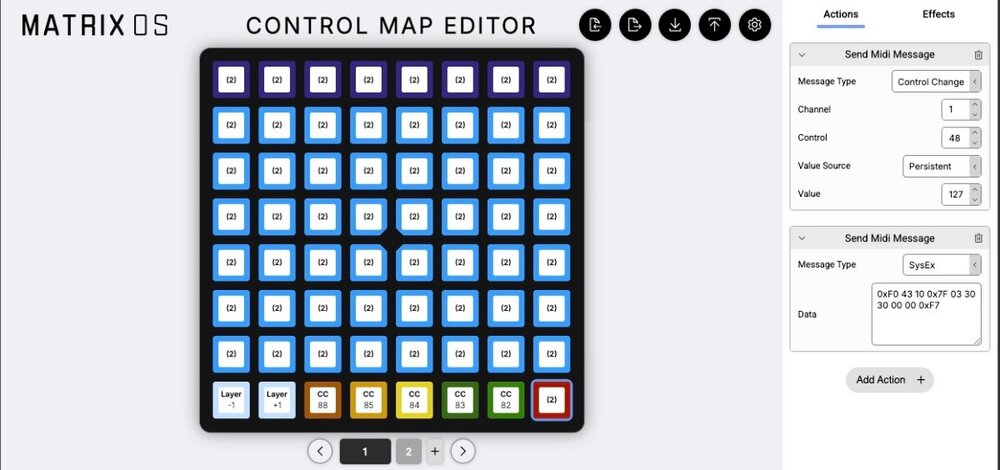
Customizable Control Map (To create a customizable control that’s portable, with computer control as a bonus)
Sequencer (Isn’t as powerful as something like OXI One, but I hope at least it’s nice to play with and experiment with)
Then the Community Matrix OS applications are more of a bonus. The environment is there, but I need more people to create interesting things to make it engaging.
I think even for the main 3 points, they are very appealing, and I don’t want the fact that it’s highly programmable to distract from the fact that it’s a very good controller already.