Hi. Newbie to this site, so you have my apologies if I am posting this in the wrong place. I need a working Eigenharp base station and instrument cable. Pro or standard, I don’t care.
Does anyone have one that they can sell or know of where one is for sale?
Thanks!
Going to the source would be the best way.
How? As far as I know they are defunct
Do you have a faulty one, or do you not have one at all…? I’m wondering if it might be possible to make a substitute if someone was willing to open one up.
IIRC MIDI is unused…? Lemo 8-pin connector…?
I wouldn’t have thought it would be too difficult; just need to identify the transformer and wiring. I guess it might have active electronics. Would need to take a look.
There’s some stuff about power here. Do the Alpha and Tau have different base stations…? Which one do you need…?
(I’d be very surprised if you could get support from Eigenlabs. I think we’re on our own now.)
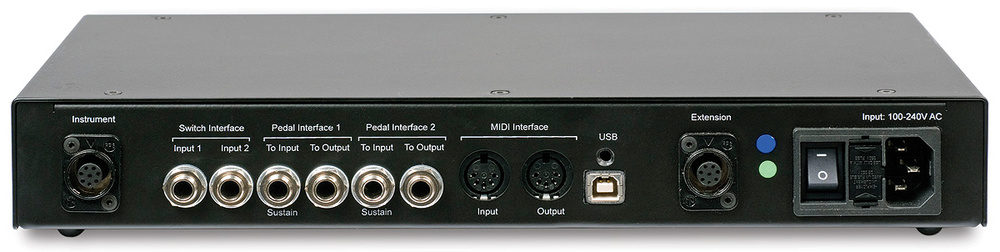
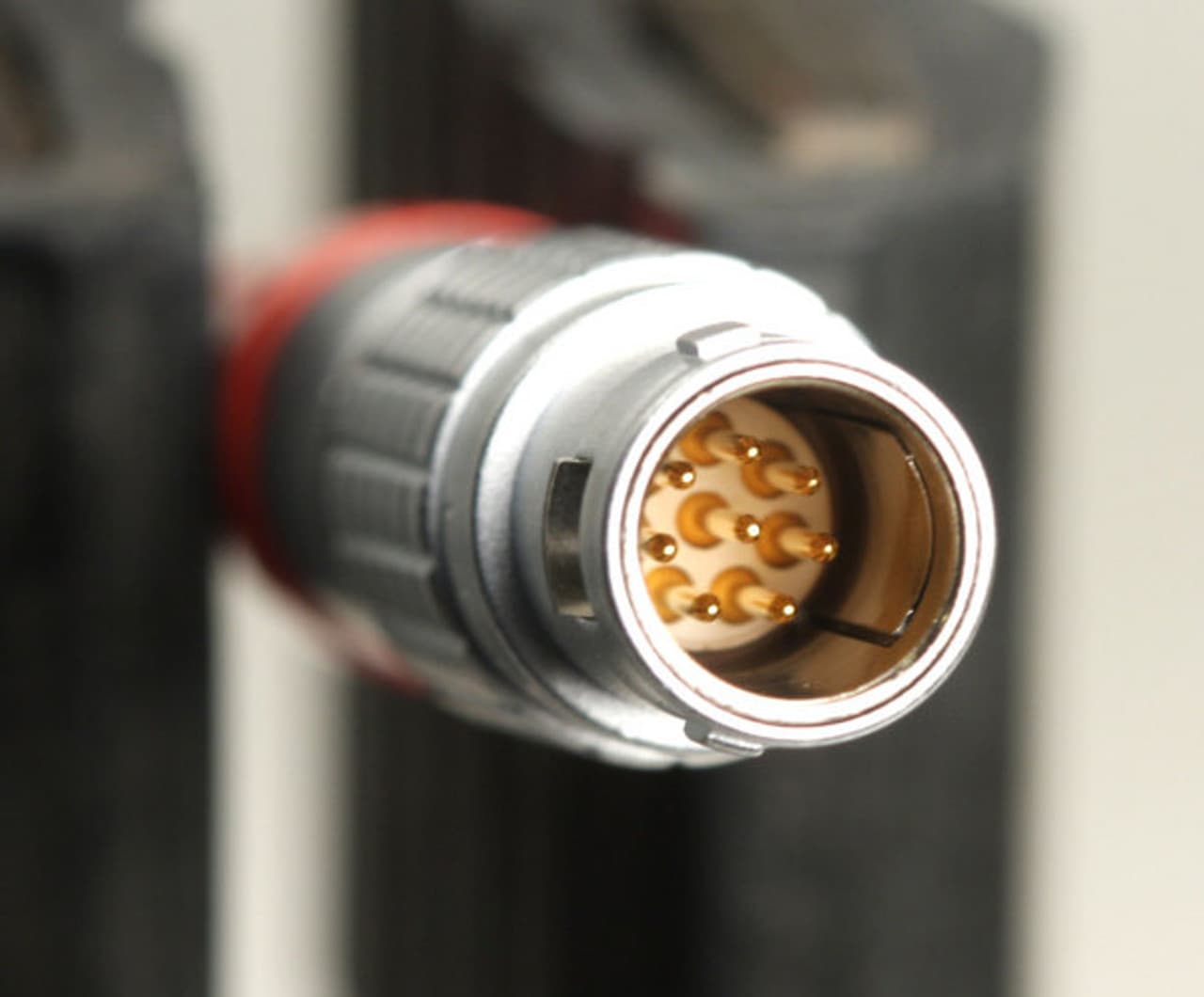
Unfortunately, no I do not have a base station at all. I got the instrument, it’s a Tau, used online and the seller didn’t realize the significance of the base station and tossed it. Essentially, it’s a brick at the moment.
I have a non-working basestation that I opened up to do some debugging on. I didn’t get very far because I managed to acquire a working one.
IIRC a lot of the instrument complexity is in the basestation and there is an FPGA with a bunch of custom logic. The flash that programs it on boot is probably encrypted. It’s maybe not impossible to replicate (there are some notable exploits), but definitely not easy.
yeah, it appears the basestation and the instrument, have a bootloader which receives the actually firmware code thats run.
we know something of that boot loader protocol, as we have the code that does the uploading - BUT we dont know how that code is then ‘executed’ when the load is finished. (or if it relies on other code in the BS)
what also interesting is in the code, the large basestation is referred to as basestation whilst the ‘mini basestation’ is just referred to as PSU !
this is interesting as we were told the alpha/tau could not be a direct usb connection like the pico as they require more power than usb could supply (at that time)
so I wonder…
I believe the instrument (not BSs) have their own firmware, as we see with pico.
and so part of this upload, is just that firmware being sent to the instrument.
and possibly, the PSU variant is just that… it powers, and then proxy messages to/from instrument - nothing else.
the BS has a bit more functionality, to support the extra hardware there (e.g. midi/pedals) so it could be BS variant , includes the extra code plus instrument firmware - or is again just the instrument firmware, and the BS specific firmware is one of the (numerous) mcs files we have in the repo.
I guess, what might be interesting is to open up the ‘psu basestation’ and see what components it has… find out, if it really is just a proxy and power. ( * )
if it is, then that would potentially be easier (not easy ;)) to replicate.
( * ) this is a slight simplification, so the bs/psu both have code that decode the ‘raw’ messages of the instrument into ‘usuable’ data, basically post processing.
this code I have, as its used in the pico driver.
ofc, this creates a complication… as it again implies the psu does this transformation, so is not simply a psu + proxy. and so presumably the ihx file has some of that?
1 Like
Interesting Mark! In that thread I posted a picture of an opened “PSU” and while a lot of it is unpopulated, there’s a Xilinx XC3S100E… 100k gates which is nothing to sneeze at.
I seem to remember some video where John talked about the basestation doing much of the processing of the raw signals from the 'harp. Maybe the PROM code on the board is only the loader and the stuff that is sent over USB to the basestation is some second stage.
Regarding cloning, the PROM is unencrypted but the Spartan-3 supports some authentication step which I would bet John took advantage of.
apologies to OP, I know this is all very off-topic…
(perhaps I should split this off to a new topic?!)
sorry, my mistake… I only glanced at that topic, and thought it looked big, so assumed it was the full size BS 
… but yeah, ofc, the full size one has the PSU inside, and of course jacks and midi din connectors.
yeah, my footnote mentioned there is some processing…
I think we know that the instrument has some processing on board which gives the raw data, handles commas etc, and this is the firmware we upload to it.
(assuming this is the same same for tau/alpha as the pico)
as for processing, theres a couple of things going on…
- usb to 8 pin conversion
- raw to processes data.
then the full size basestation, has to add things like pedal support, and (not implemented) midi support.
the pico, is (obviously) direct USB, and this data conversion code is done on the computer.
so yeah, whilst the BS does this raw->processed data conversion, I have the code for this bit, or at least the pico version - but its under NDA/not open source.
we also know how the usb protocol works, as we have the (client side) code for that… we dont know anything about the usb->8 pin connector.
(id suspect the protocol is similar, the different cable I believe was used to allow for longer distances / noise protection etc)
we also dont know what the content of the ihx file is, Id not be surprised if this like the pico is just for the instrument, rather than the BS.
ofc, Im assuming theres a lot of similarity with how the pico works compared to BS + tau/alpha
perhaps another side of this to bare in mind is what we know about development…
I understand that the FPGA programming done on the BS was done by a 3rd party, as Jim once mentioned he’d ‘received’ a new version that had midi support but had not tested / released it.
if this is the case, Id not be surprised if the BS firmware was considered largely ‘fixed’, so maybe is not uploaded as part of normal process (hence the mcs files in repo)
whereas the instrument firmware (ihx) was a bit more ‘open’.
though interestingly, this also seems be under some kind of license, which is why Eigenlabs were not able to open source the ‘pico code’ along with the main EigenD code.
same situation with the windows driver.
generally, I think the hardware firmware was outsourced, and used under license.
(ofc, probably to design, specifications etc set by EigenLabs, likely just the actually implementation required skills outside the eigelabs team!?)
So, a firmware with MIDI support for BSP exists? Perhaps somebody still has it? This would be cool!
unfortunately, yes and no…
(sorry, didn’t mean to give ‘false hope’ … more a side story)
so, Jim had received a BS firmware that apparently had it implemented.
however, he hadn’t even tested it, nor implemented within EigenD, so it was not released.
I don’t believe it’s stored in the repo, so we dont have access to it.
( I think Jim only received it around the time EigenLabs were ceasing development- hence why he’d not got around to trying it out at all)
1 Like
Does it even need support in EigenD? If somebody has contact to Jim, asking him whether he still has it lingering around somewhere couldn’t hurt
yes, it would need changes in EigenD.
basically, it would send messages to EigenD via the protocol used by the BS (not midi), then EigenD would convert these into something ‘useful’.
we don’t actually know exactly what this was planned to look like as it wasn’t implemented … I guess it could have been something like the midi modules within eigenD.
also we dont know if the bs firmware changes would work, as even Jim didnt get around to testing them, so it be kind of risky to use - nothing to say it wouldn’t break something else - and there’d be no opportunity for fixes etc.
Ah, ok, so Keygroups etc. would still not run in the basestation but would still need a computer. Then it would essentially be just like attaching a midi-interface to the notebook. Which would also be nice-to-have but not a standalone solution that can send MIDI to a synth by itself.
yeah, would have just provided a midi interface - you’d still need EigenD running.
theres some references to the wire protocol in lib_alpha/alpha2_usb.h.
looked like it was going to be a data stream a bit like mic, pedal etc.
ofc, this is just an ‘educated’ guess, as we never saw any real implementation and only the wire protocol bit had some code - the code to use it was not written.
1 Like
I thank everyone who responded. It’s killing me to have a beautiful instrument just sitting in its case.
so from your previous post, you don’t have a base station at all.
did you attempt to contact Eigenlabs/John from contacts above?
I assume you didn’t get any reply.
the issue is, the vast majority of people won’t have a ‘spare’ basestation, just the one they got for their own Eigenharp (tau or alpha)
I guess, the hope is someone had one for redundancy? or their tau/alpha failed?
as you said, in your WTB, I think (unfortunately),
perhaps the only option is to try to buy an entire Alpha or Tau rig, then use this as a ‘backup’.
or I guess, the opposite, and try to sell this (to someone as a backup) , and still look for an complete rig.
just a word of caution though, on both…
a) you bought this used, and have, presumably, been unable to test it as you don’t have a base unit. so investing in it or selling it - is kind of high risk
where are you based? any possibility of meeting up with someone to test it?
b) we see very few eigenharps sold, and the vast majority we see are picos (no good to you) , the odd tau, and not even sure of the last time I saw an alpha for sale. obviously this is partly down to their original price, and volumes (or lack of) sold.
as an aside, whilst I think we do have a good number of Eigenharp players here, its still a pretty small forum, with limited reach… we are not actively pushing it.
so, if you haven’t already, I’d cast the net wide for (wtb) base station / eigenharp… on the off chance, someone, perhaps not actively using their eigenharp (so not here), see its.
agreed though, very sad, to see hear of such a great instrument not being used 
good luck, I hope you get it resolved one way or another …
1 Like